Gdańsk may be just across the Baltic Sea, but arriving here feels like stepping into a different world painted in warm hues, Hanseatic facades, and streets steeped in history.
Our morning flight from Stockholm to Gdańsk took barely an hour and fifteen minutes, making it an effortless weekend escape. With our return flight scheduled for the following afternoon, we had just enough time to immerse ourselves in the beauty of Poland’s northern port city.
From the airport, we hopped on bus 210 to Dworzec Główny (Gdańsk Central Station), a pocket-friendly, direct ride into the city. Gdańsk is wonderfully walkable, so we didn’t need any local transport once we arrived.
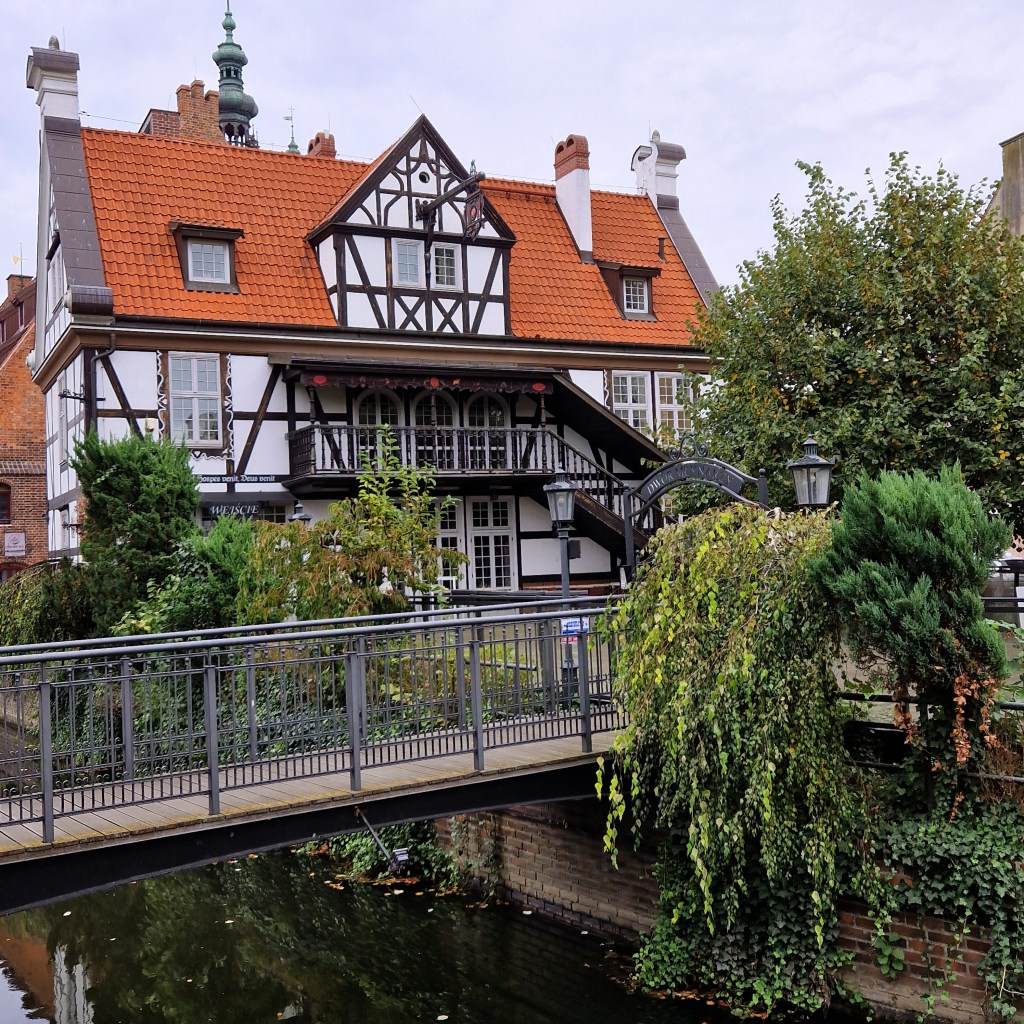
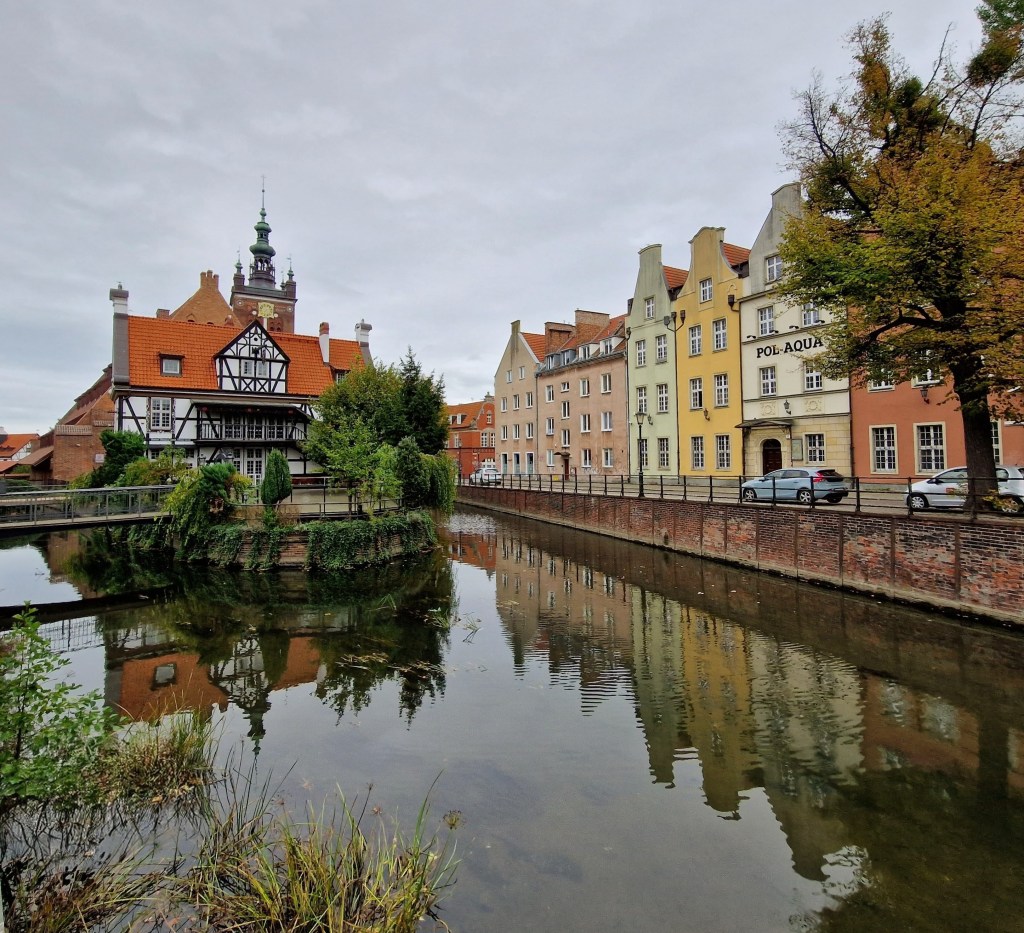
From the station, we began our walk toward Dwór Cechu Młynarzy (Millers’ Guild Manor), a beautifully restored half-timbered house near the Great Mill, set on an island formed by the Radunia Canal. Once the headquarters of Gdańsk’s millers’ guild, the manor is now home to a restaurant. Reflected in the calm canal waters it is one of the city’s most photogenic spots. The best view is from the Bread Bridge (Most Chlebowy), often called the Bridge of Love, a postcard-perfect spot for photos.
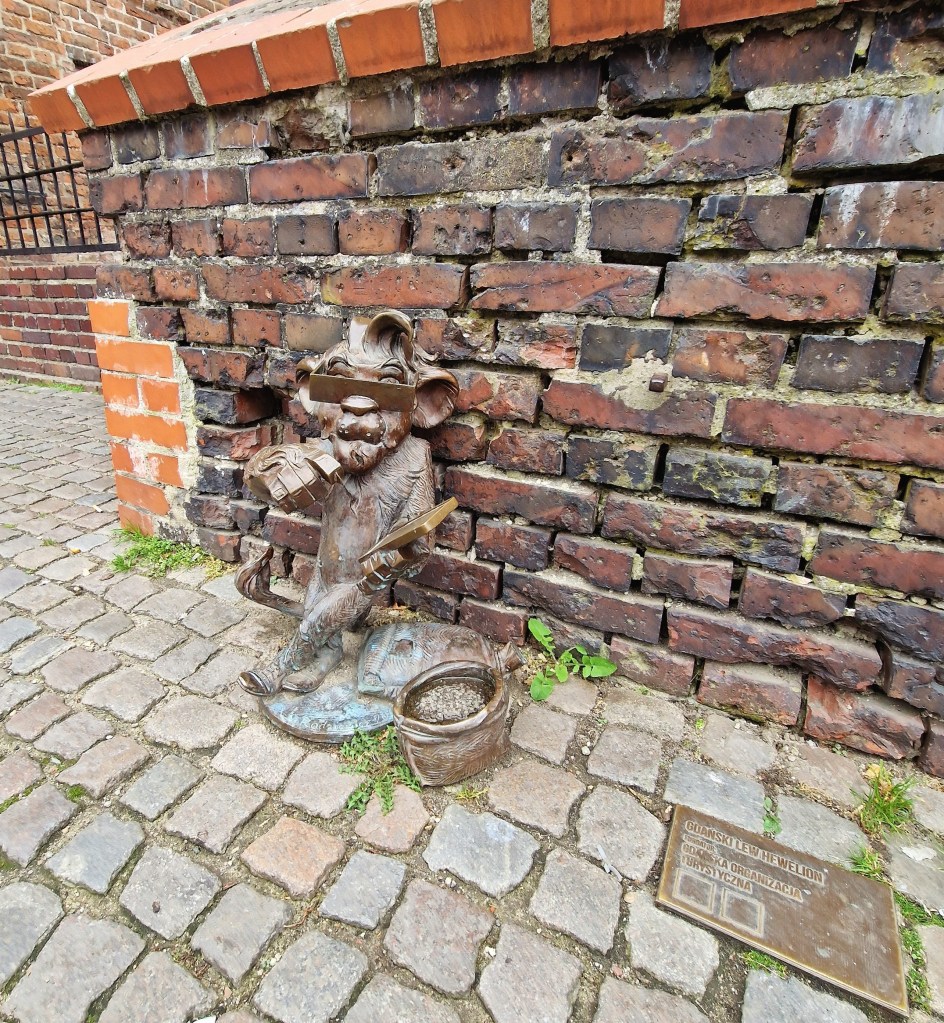
While exploring the area, we stumbled upon Lew Hewelion – the Businessman, one of Gdańsk’s charming bronze lion sculptures celebrating the city’s enterprising spirit. Having discovered the famous gnomes in Wrocław, it was a delightful surprise to find their Baltic cousin here.
No visit to Poland is complete without tasting its national comfort food, pierogi. At Pierogarnia Mandu Gdańsk Śródmieście, steaming plates arrived filled with everything from potatoes and cheese to meat and seasonal vegetables.
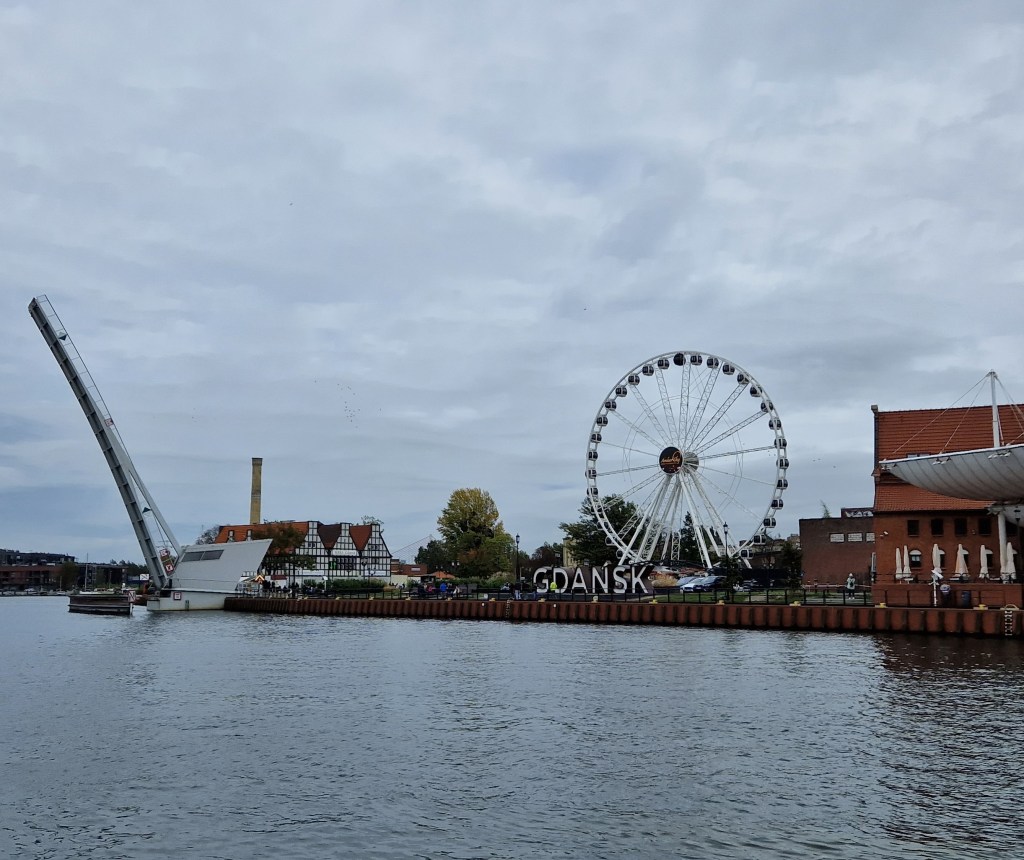
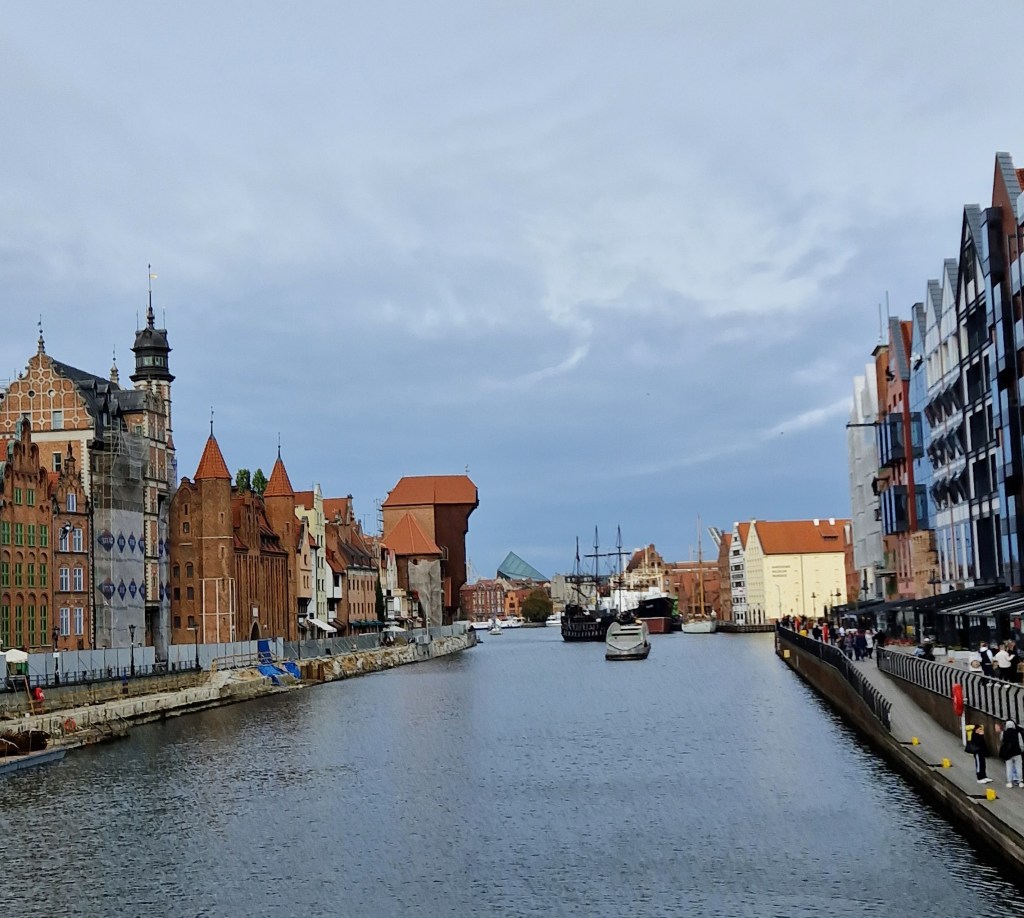
After lunch, we walked past St. Catherine’s Church, one of the city’s oldest, and continued toward the Motława River. Along the waterfront, a living glimpse of Gdańsk’s maritime past, we made our way to the Green Bridge (Zielony Most), our meeting point for the walking tour.
A Walk Through the heart of old town
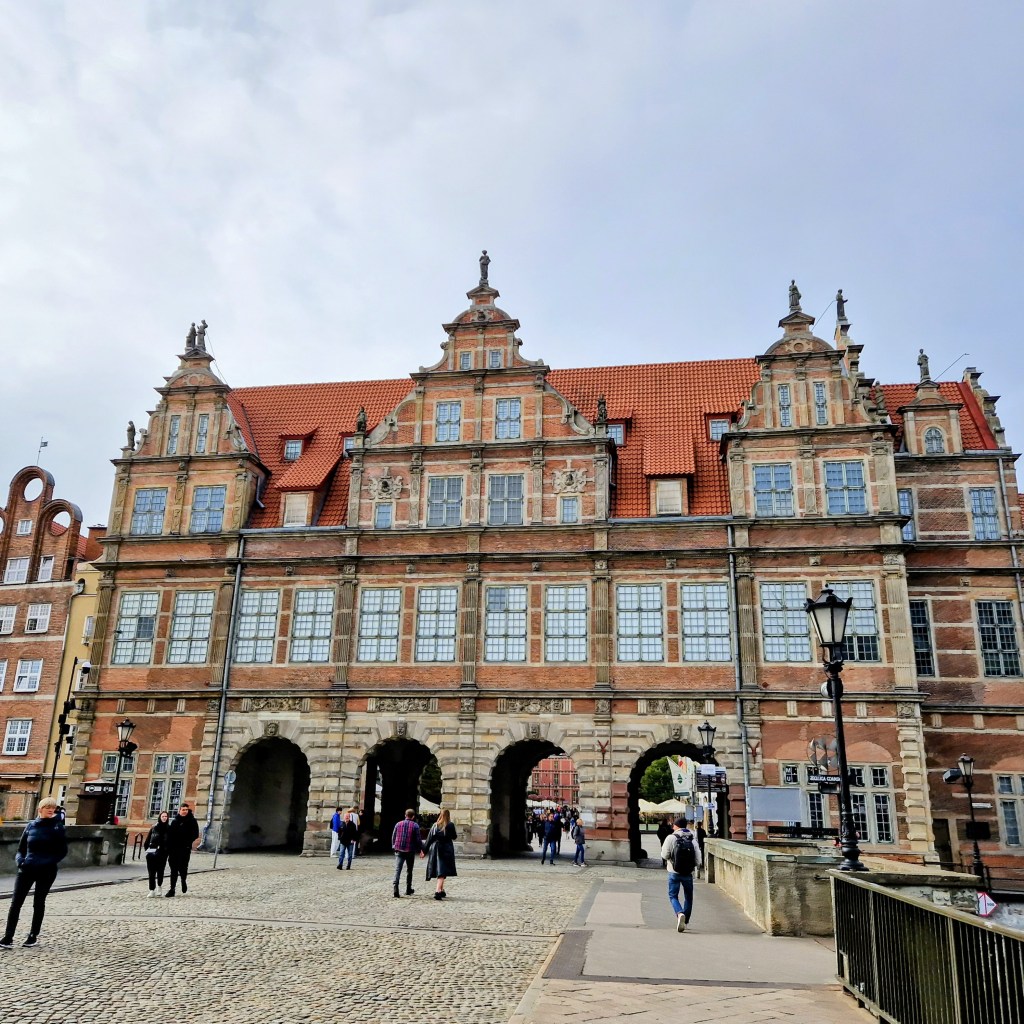
Our guided walking tour, booked via GetYourGuide, began at the Green Bridge, with views of the Green Gate and the iconic Crane (Żuraw) standing proudly along the river.
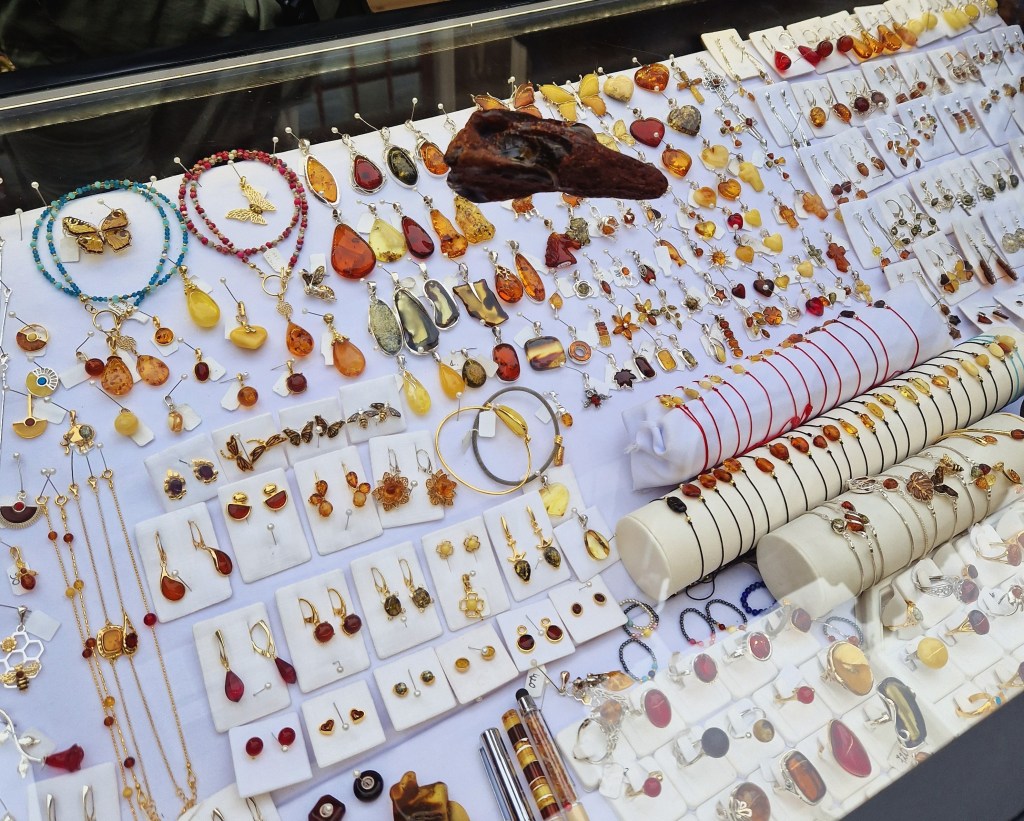
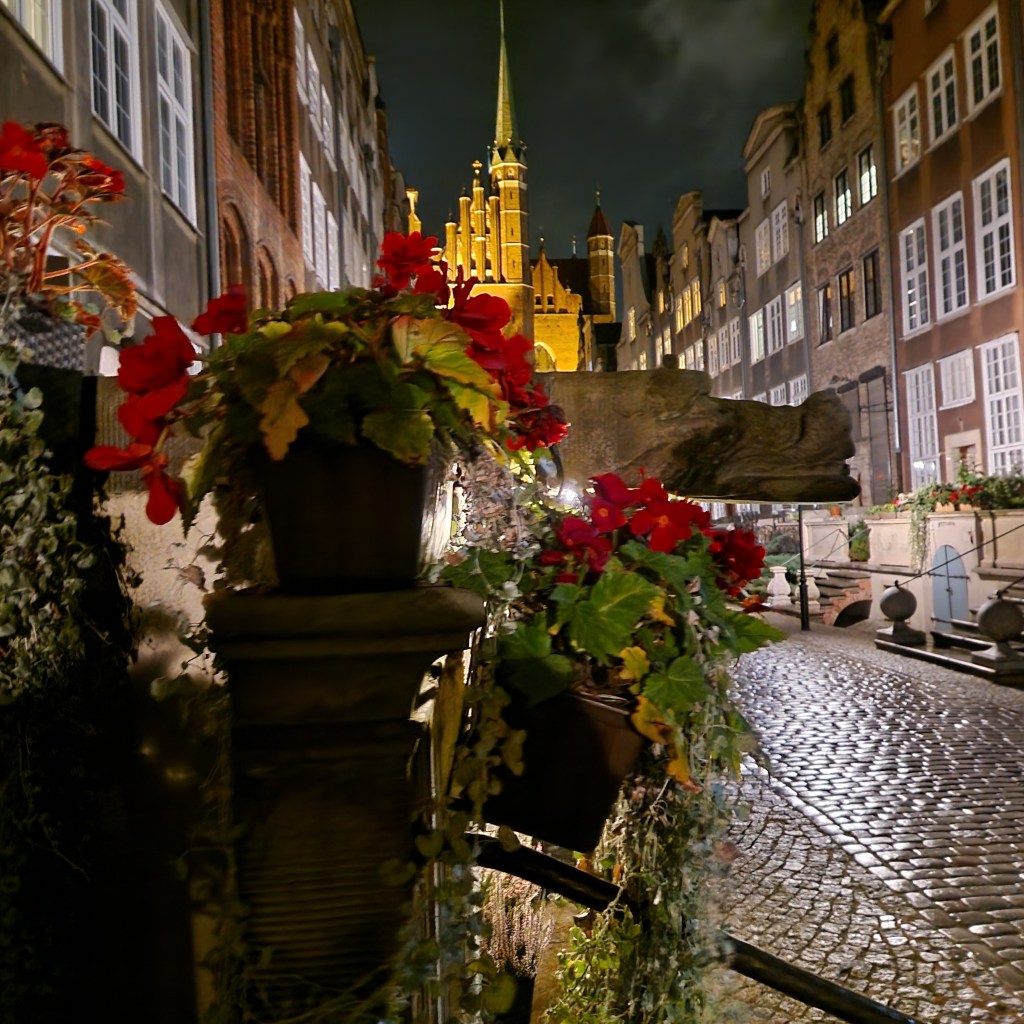
We followed the waterfront towards St. Mary’s Gate (Brama Mariacka), the entrance to the charming Mariacka Street, lined with amber shops that echo Gdańsk’s long history as a hub of the amber trade. Carved stone terraces with small gargoyles added added a touch of medieval artistry.
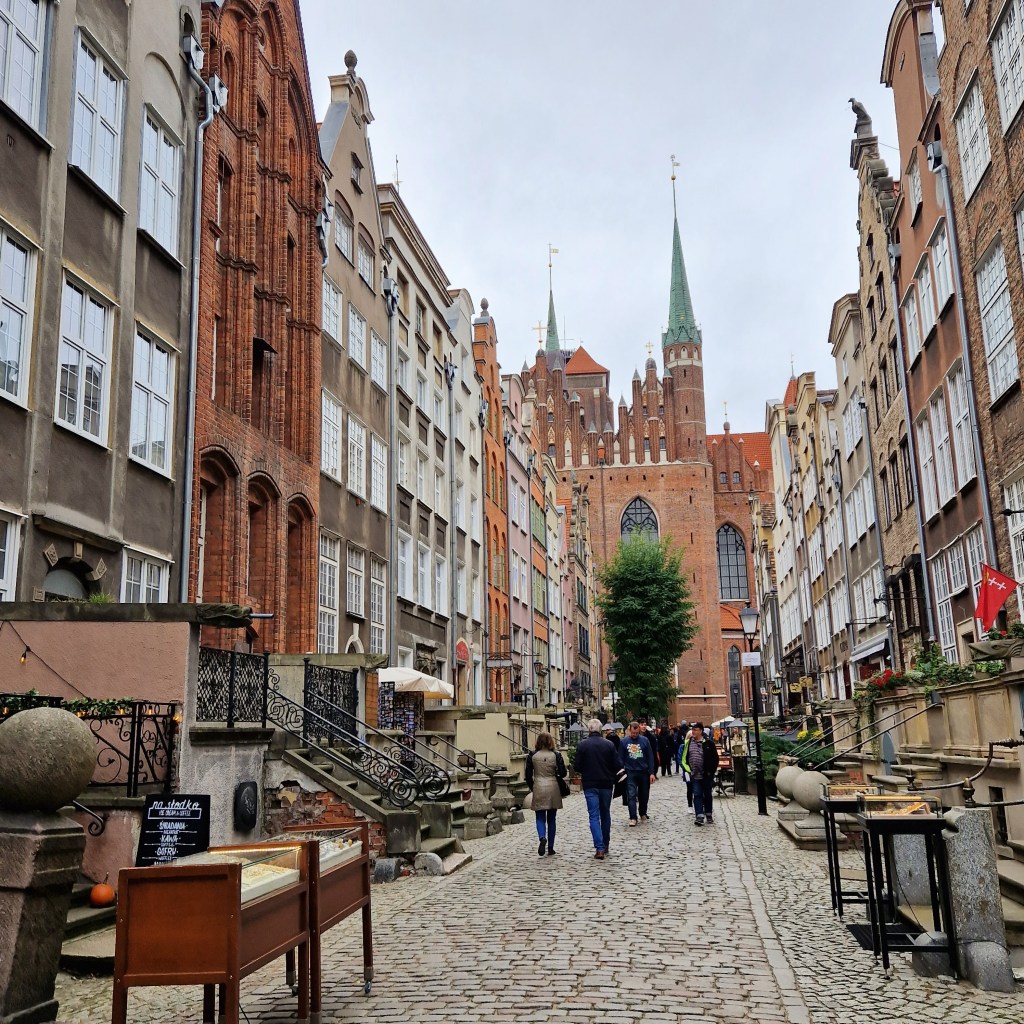
Next, we reached the Royal Chapel and the St. Mary’s Basilica, one of the largest brick churches in the world. Inside, lofty vaulted ceilings and soft shafts of light create a serene and reverent space. The church also houses the Gdańsk Astronomical Clock, a 15th-century masterpiece of art and engineering.

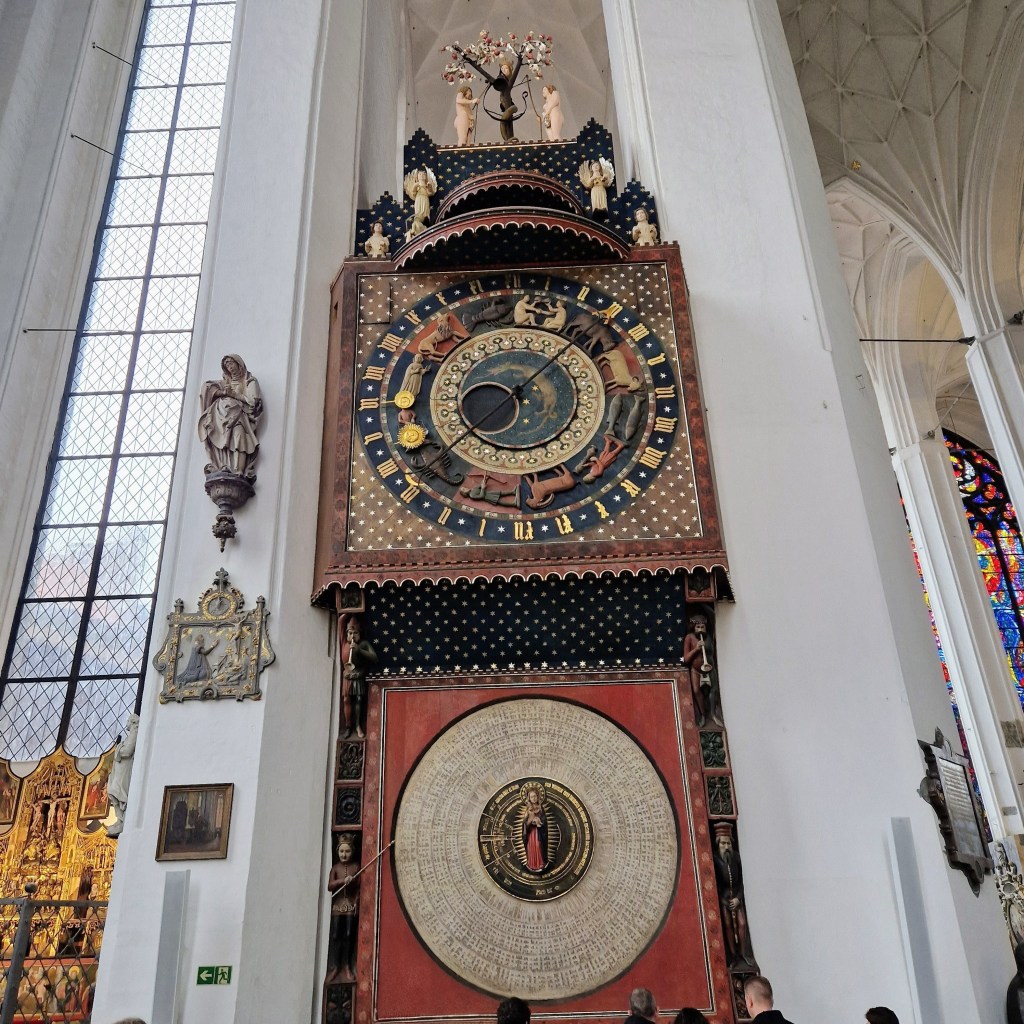
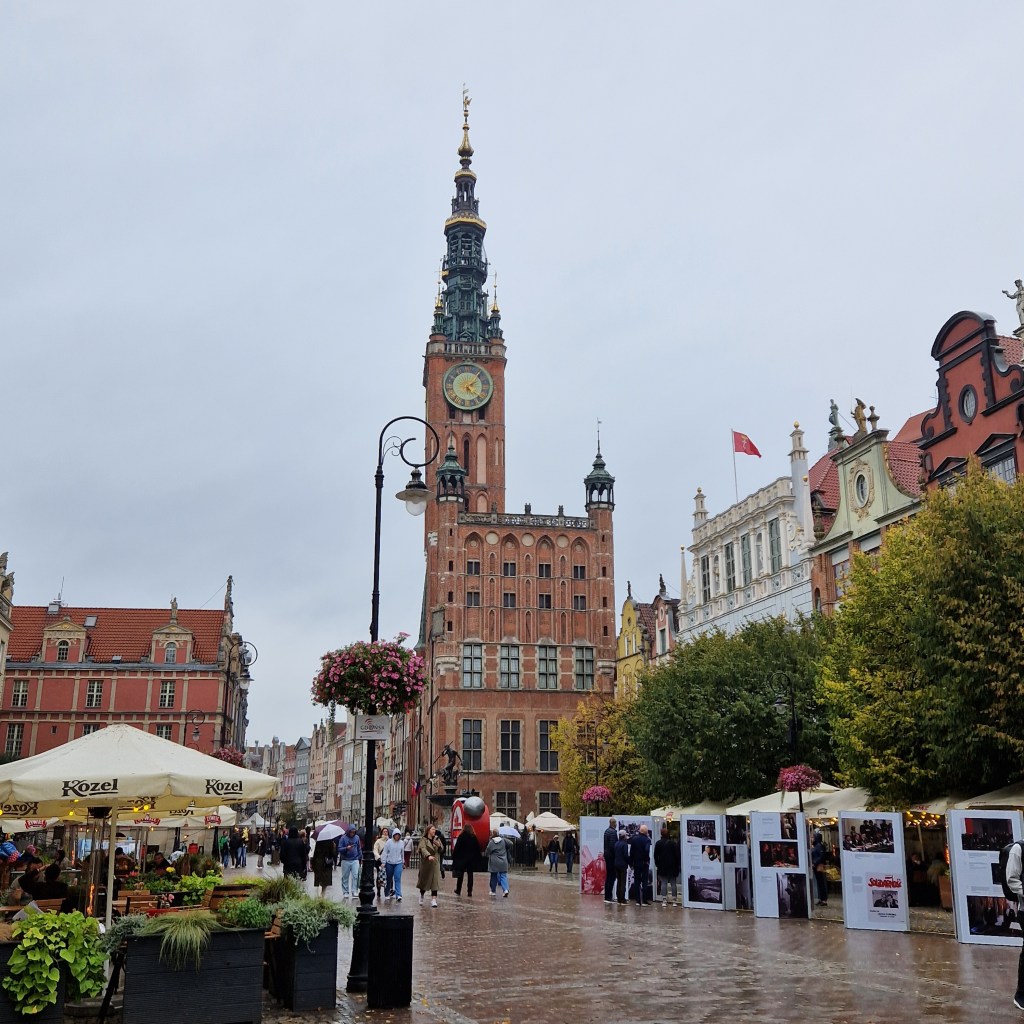
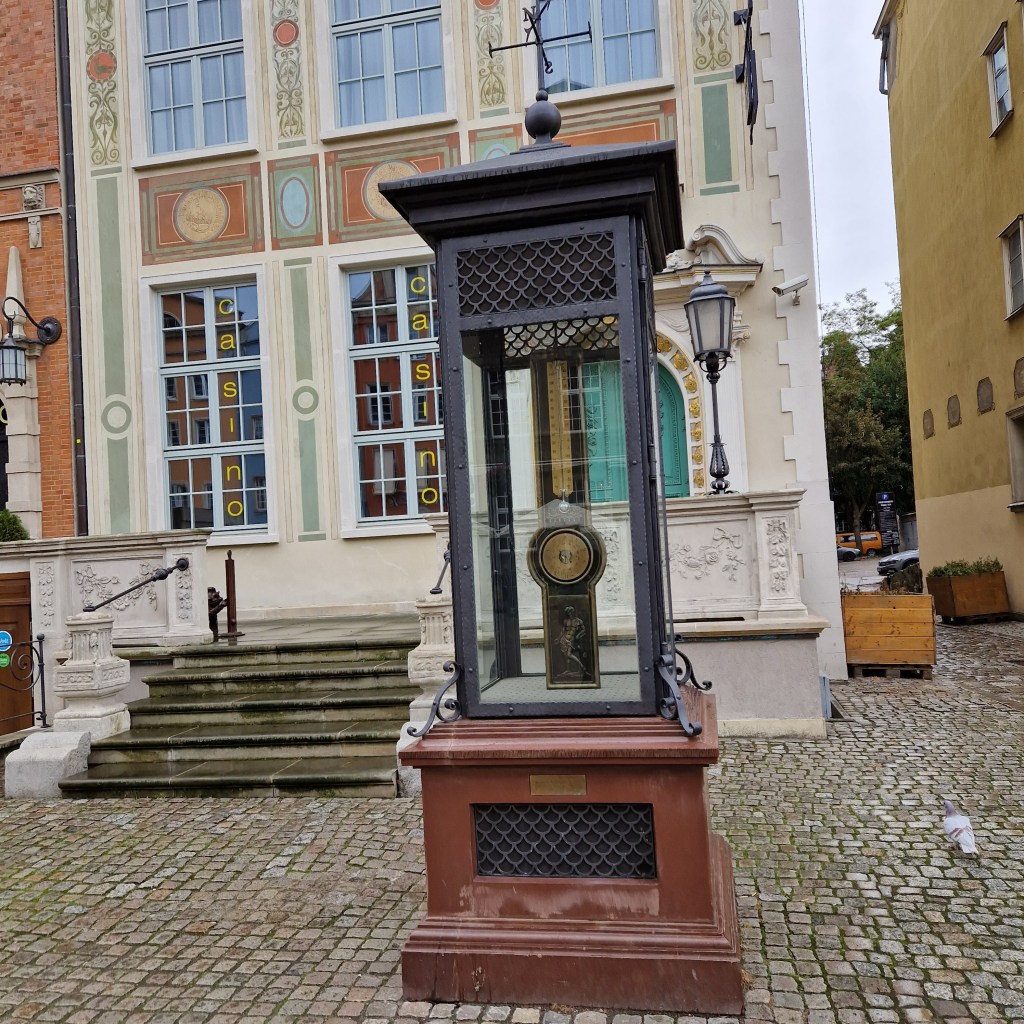
We continued past the Royal Armoury, the Golden Gate (Złota Brama), and into Długi Targ, the city’s grand market square. Framed by ornate townhouses, the square features Artus Court, the Neptune Fountain, and even the historic Fahrenheit scale — reminders of Gdańsk’s long legacy of science, trade, and maritime culture.

evening by the river
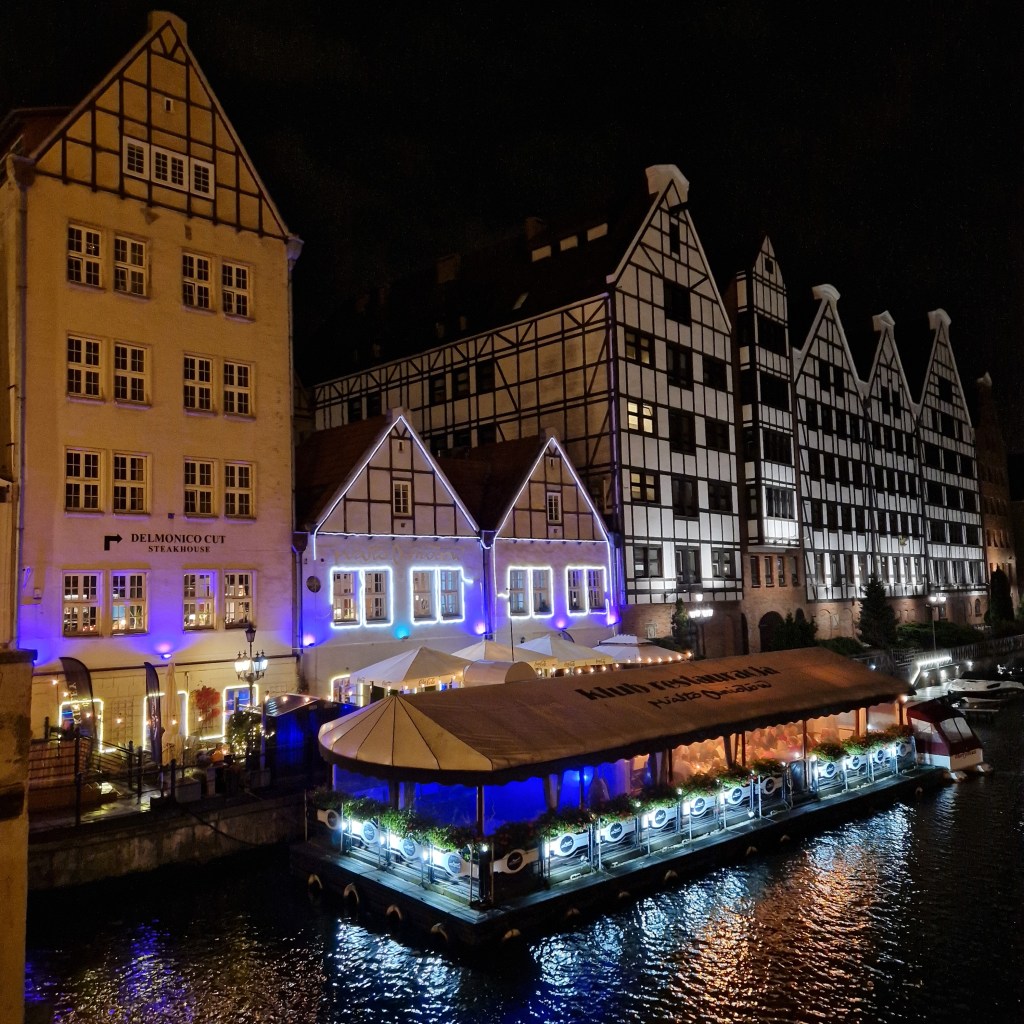
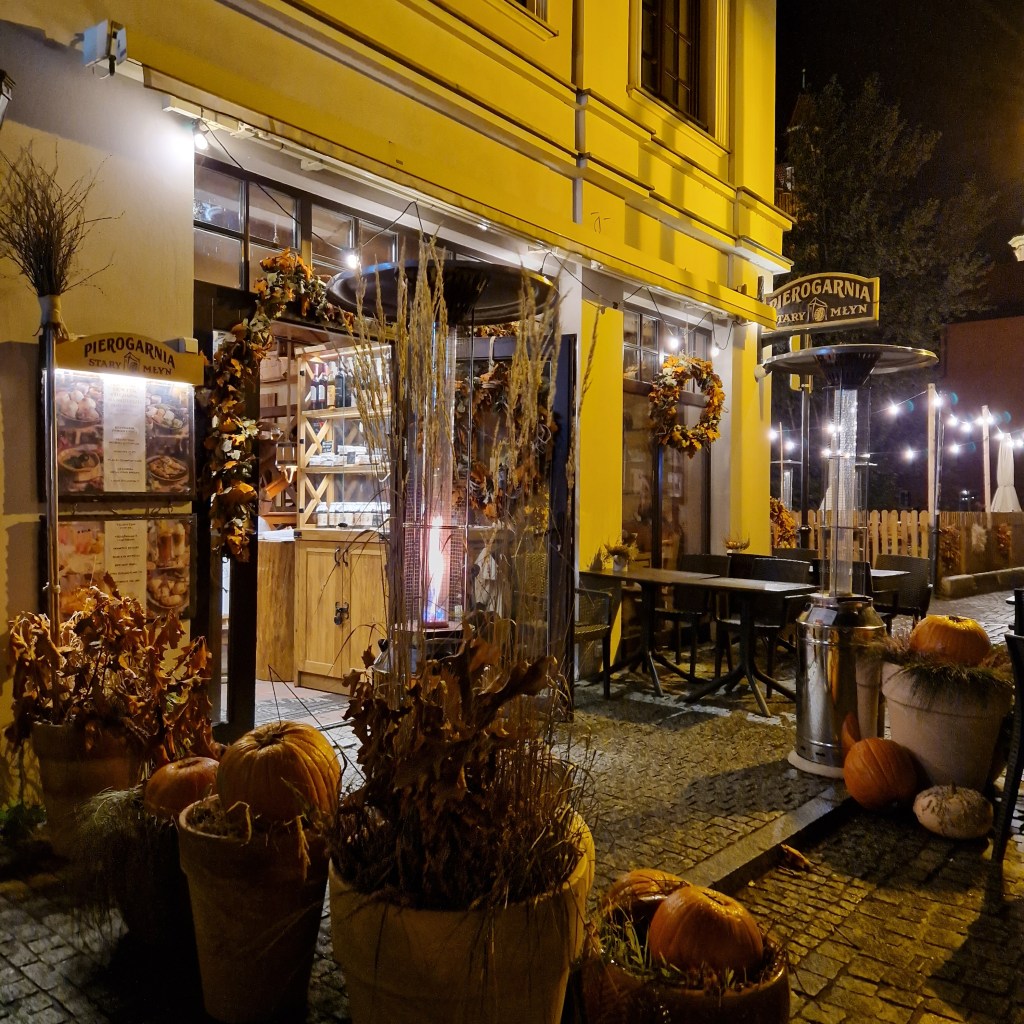
After the tour, we checked into our hotel in the historic Old Town, where Hanseatic-era warehouses line the harbourfront. As dusk settled, the city glowed with golden reflections on the Motława River. We headed out again for dinner at Pierogarnia Stary Młyn Gdańsk Św. Ducha, a cosy spot perfect for a relaxed evening meal with traditional flavours.
the next morning
The next morning, after a hearty breakfast in one of the cafés in Old Town, we took a final stroll through Długi Targ before catching the afternoon bus to the airport leaving Gdańsk with memories of amber streets, comforting food, and timeless charm.
notes
Month of Travel: October
Duration: 24 hours
Transport:
- Flight: Stockholm to Gdańsk (1h 15min)
- Bus 210: Gdańsk Airport ↔ Dworzec Główny
💡Tips:
- The city is best explored on foot. Wear comfortable shoes for cobblestone streets.
 Our Wandering Chapter
Leave a comment