Andalusia is full of towns that seem to belong to another time, and two of the most remarkable are Ronda and Setenil de las Bodegas.
After a memorable first day wandering through Málaga, the following morning we set out on a scenic journey into the Andalusian countryside to explore these historic towns nestled among the hills of southern Spain.
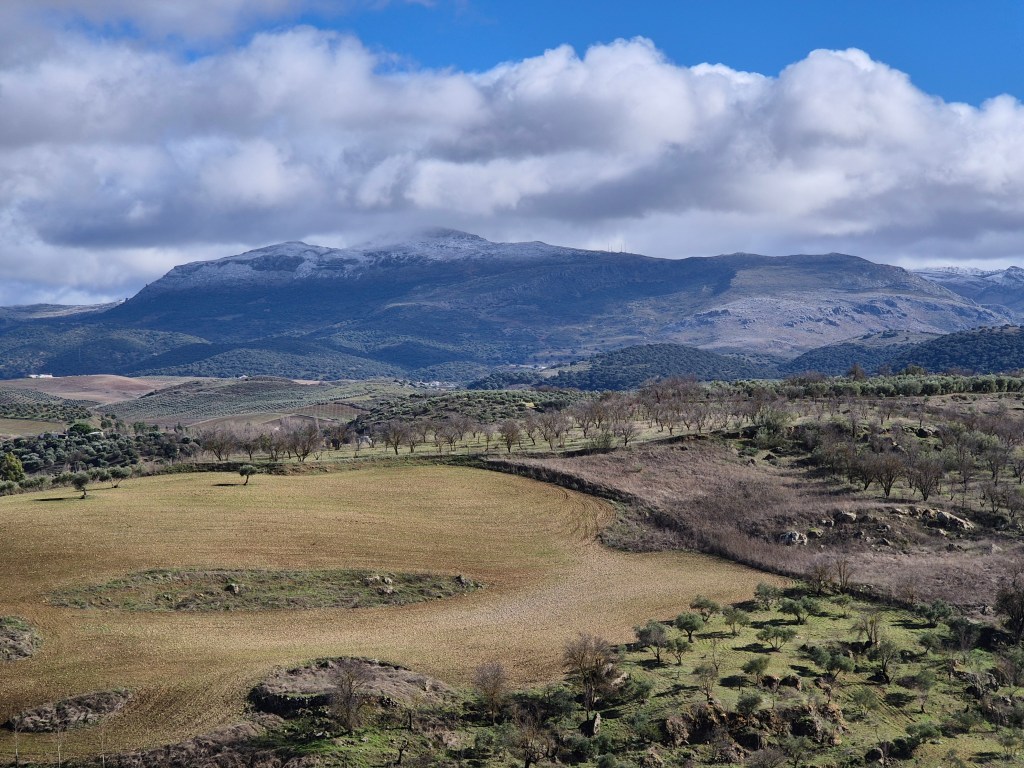
We booked the trip through GetYourGuide, and the journey began outside Málaga María Zambrano station, where our bus picked us up early in the morning. As we left the city behind, the scenery gradually shifted to open countryside, olive groves, and distant hills, a glimpse of the vast landscapes that define inland Andalusia.
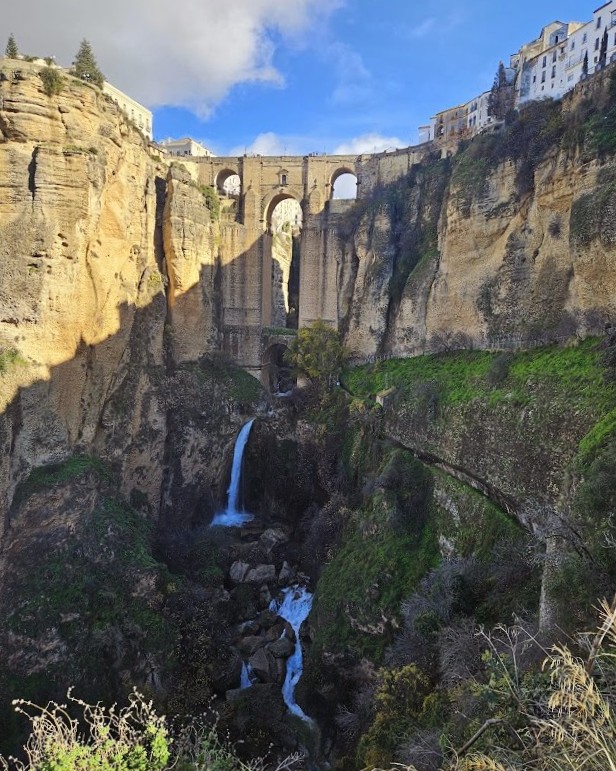
After a scenic drive through the region, we soon arrived in Ronda, perched dramatically above a deep canyon and surrounded by sweeping countryside. Waiting ahead were cliffside viewpoints, historic streets, and one of Spain’s most breathtaking bridges.
- Exploring Ronda: Clifftop Views, Historic Streets, and Puente Nuevo
- Miradors of Ronda: Views of Puente Nuevo and El Tajo
- The Best View of Puente Nuevo
- Through the Old Town of Ronda
- Setenil de las Bodegas: A Village Built into the Rock
- Returning to Málaga
Exploring Ronda: Clifftop Views, Historic Streets, and Puente Nuevo
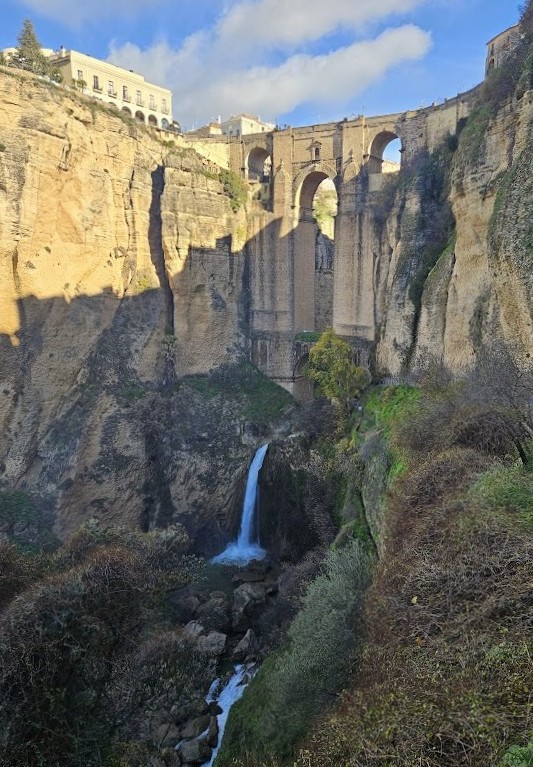
Ronda sits dramatically on the edge of the Guadalevín River canyon, known as El Tajo, which splits the city into two parts. Connecting these towering cliffs is the town’s most famous landmark, Puente Nuevo (The New Bridge), an extraordinary 18th-century stone bridge rising nearly 100 metres above the gorge. From many corners of the town, the bridge appears in different frames: between rooftops, across the canyon, or soaring above the winding river far below.
It is no surprise that Ronda is one of the oldest towns in Spain, with layers of Roman, Moorish, and Spanish history visible in its streets and monuments.
Our bus dropped us near the Ronda bus stop, giving us about four hours to explore the town at our own pace.
From there, we began walking towards Alameda del Tajo, a peaceful park perched right on the edge of the cliffs. Tall trees and quiet pathways lead to panoramic balconies overlooking the canyon, where the views suddenly open up to reveal the vast Andalusian countryside stretching far into the distance. Standing at the edge of these viewpoints, the dramatic depth of El Tajo gorge becomes strikingly clear.
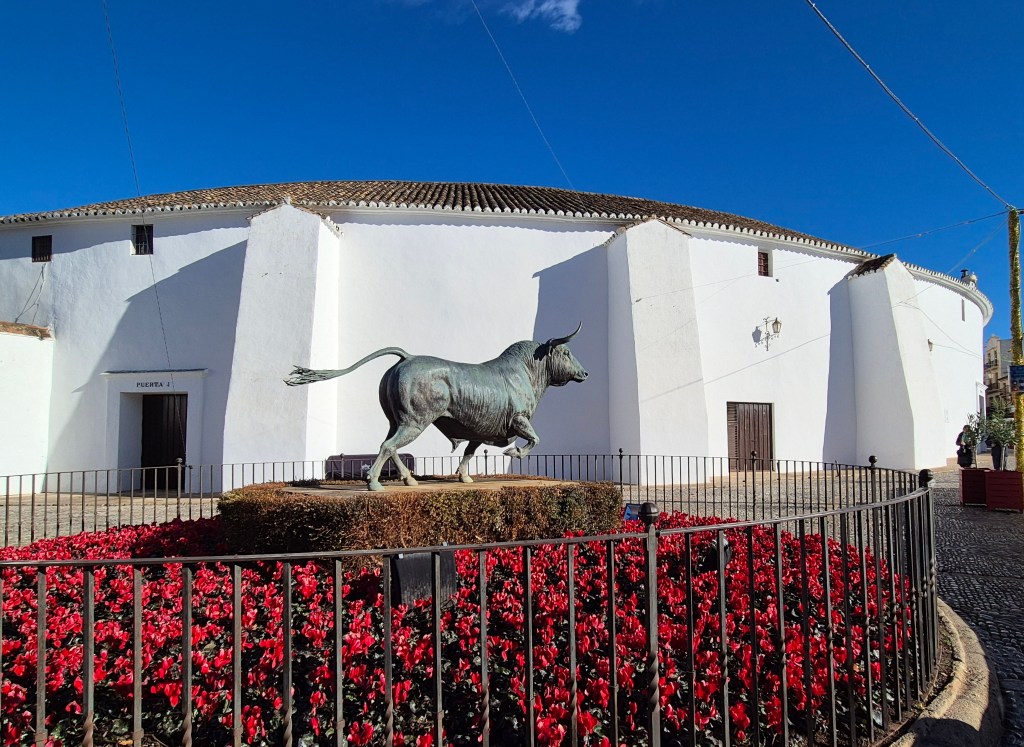
From the park, our walk continued past the Plaza de Toros de la Real Maestranza de Caballería de Ronda, one of Spain’s oldest and most famous bullrings, whose elegant façade remains one of the defining sights of the town.
A few streets later, the view of Puente Nuevo began to appear. Walking across the bridge is an experience in itself. The immense stone structure spans the canyon dramatically, linking the old Moorish town with the newer part of Ronda. Standing at the centre of the bridge and looking down into the gorge reveals the immense scale of the landscape surrounding the town.
Miradors of Ronda: Views of Puente Nuevo and El Tajo
One of the best ways to experience Ronda is simply to wander from viewpoint to viewpoint, each offering a slightly different perspective of the bridge and canyon. Ronda has several spectacular viewpoints of Puente Nuevo, each revealing a new angle of the bridge and the dramatic landscape of El Tajo gorge.
Just after crossing the bridge, we reached Mirador el Aldehuela, one of the most famous viewpoints in the town. Though often busy with visitors, the view here is spectacular: the arches of Puente Nuevo, the steep cliffs of the gorge, and the white houses clinging to the canyon’s edge.
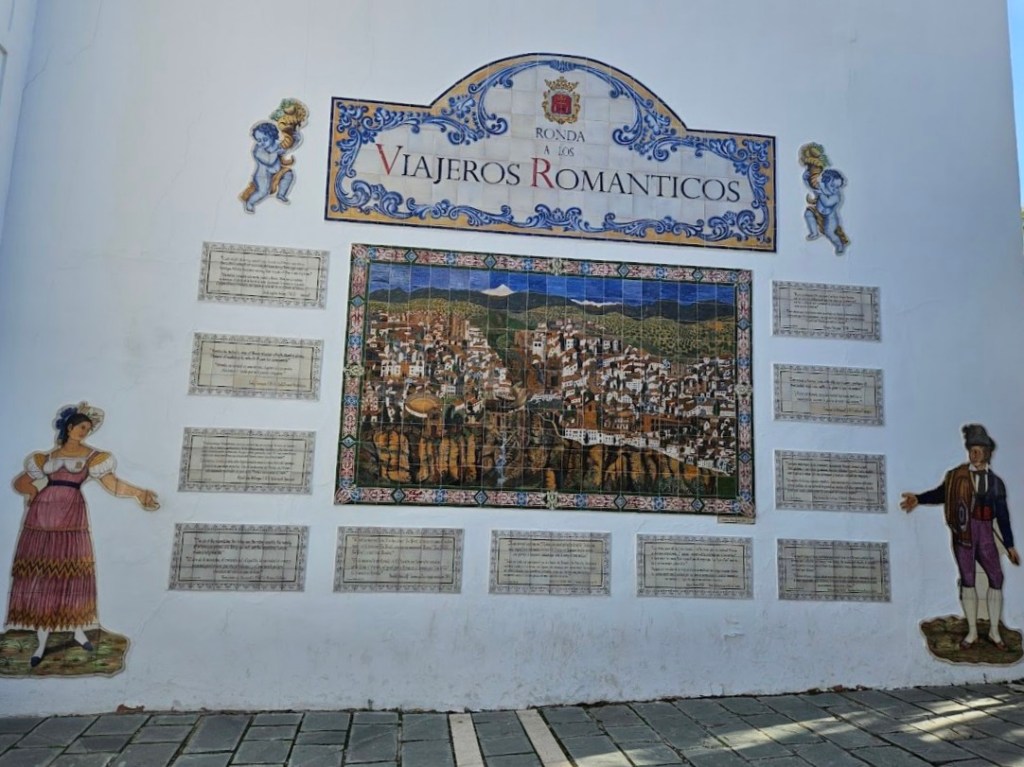
A short walk further brought us past Mirador de los Viajeros Románticos, where a beautiful mural celebrates the Romantic travellers and writers who once visited Ronda and helped make the town famous across Europe.
Continuing on, we reached Mirador del Puente Nuevo, another incredible vantage point overlooking the gorge. From here, the sheer scale of Desfiladero del Tajo becomes even more impressive, with towering rock walls plunging deep towards the river below.
At the entrance to the gorge pathway, visitors can purchase a €5 ticket to walk along a path carved beside the cliff face. During our visit in December 2025, restoration work was still underway to extend the route closer to the bridge. We could walk the section that had already been completed, wearing safety helmets as the pathway runs right beside the rock façade.
It will likely be even more impressive once the full route is finished. Nevertheless, the viewpoint near the entrance offers breathtaking views of the canyon and the bridge above.
The Best View of Puente Nuevo
It is entirely possible to skip the paid pathway and continue walking downhill to one of the best vantage points of Puente Nuevo.
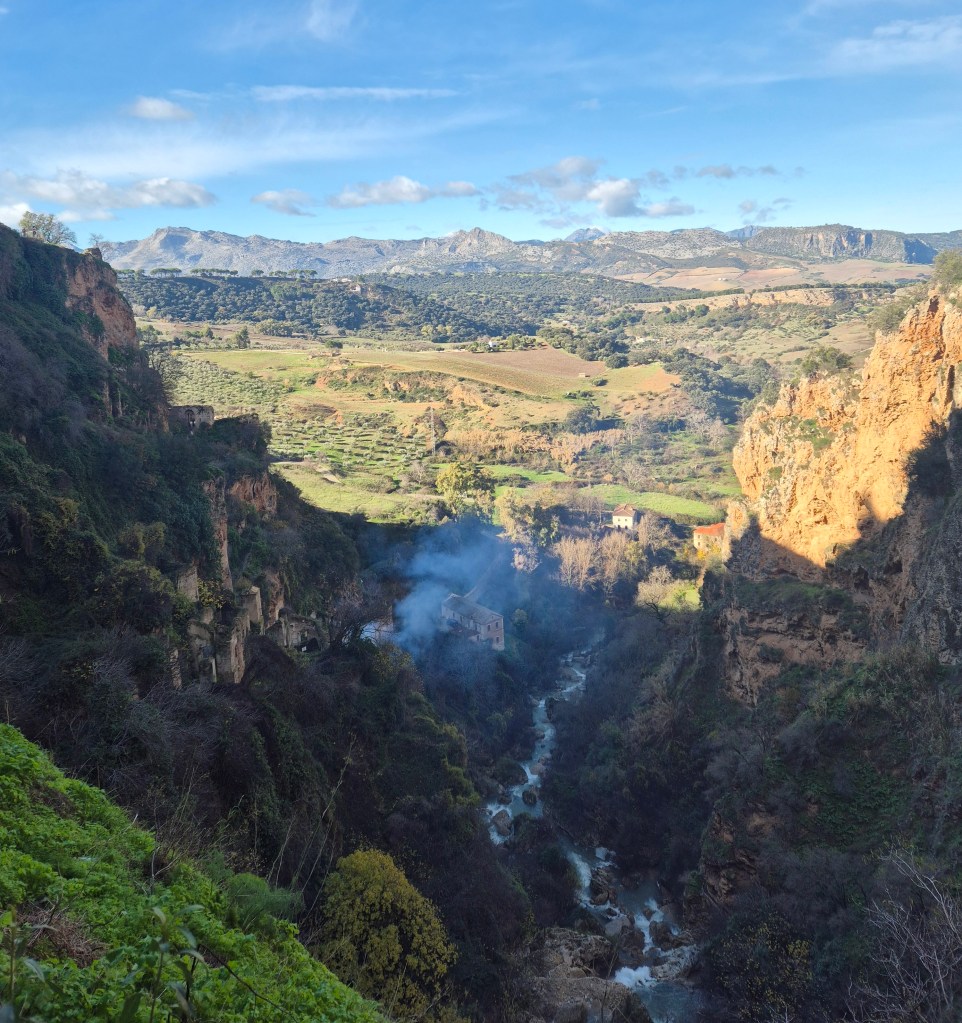
After admiring the views from the upper viewpoint near the ticket entrance, we followed the path downhill to the Arabic Arch, also known as the Arch of Christ. Here the landscape suddenly opens up to reveal the bridge from below, perhaps the most iconic perspective of Ronda’s famous landmark.
From this vantage point, the massive arches of Puente Nuevo rise dramatically above the canyon, framed by rugged cliffs and the surrounding countryside. It is one of those viewpoints where you instinctively pause for a while, simply taking in the scenery.
Through the Old Town of Ronda
After soaking in the views, we walked back up the same path and eventually entered Ronda’s historic Moorish quarter, where narrow streets wind between whitewashed houses and centuries-old walls.
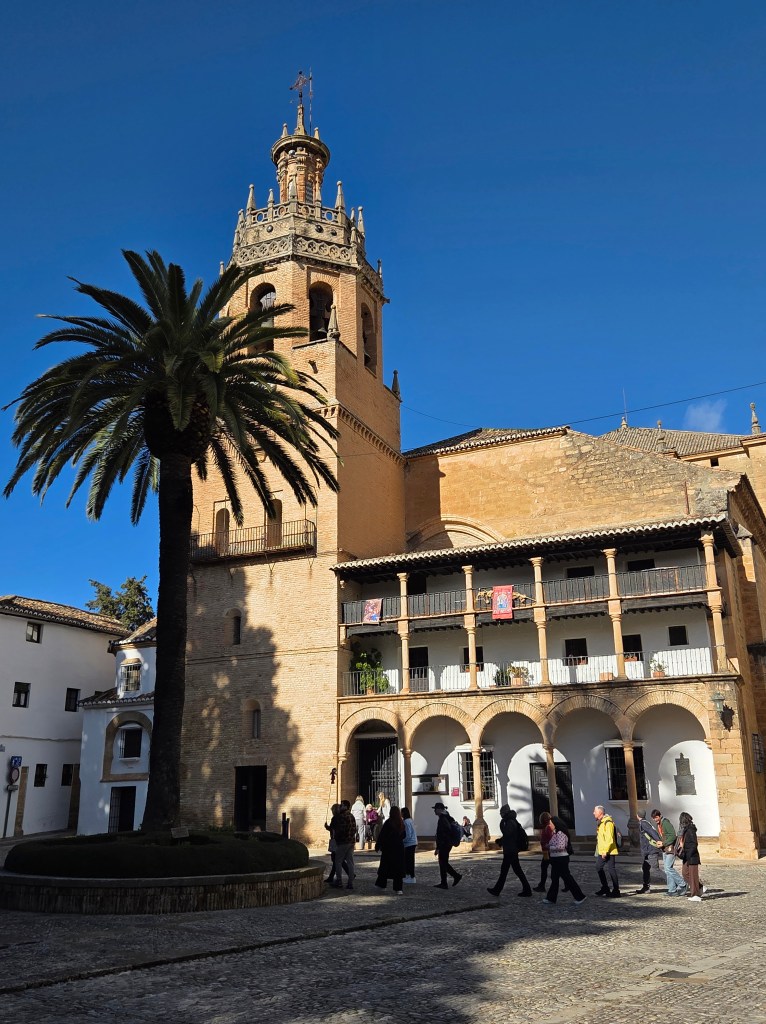
Continuing through the old town, we reached Plaza Duquesa de Parcent, a beautiful square surrounded by historic buildings. The square is home to Ronda’s Town Hall and the Church of Santa María la Mayor, a striking church built on the site of a former mosque.
While wandering through the alleys nearby, we stopped at a small pastry shop called Tira Miss U. The friendly owner welcomed us warmly, and before long we were enjoying one of the most delicious tiramisus we had tasted, a perfect little pause during our exploration of the town!
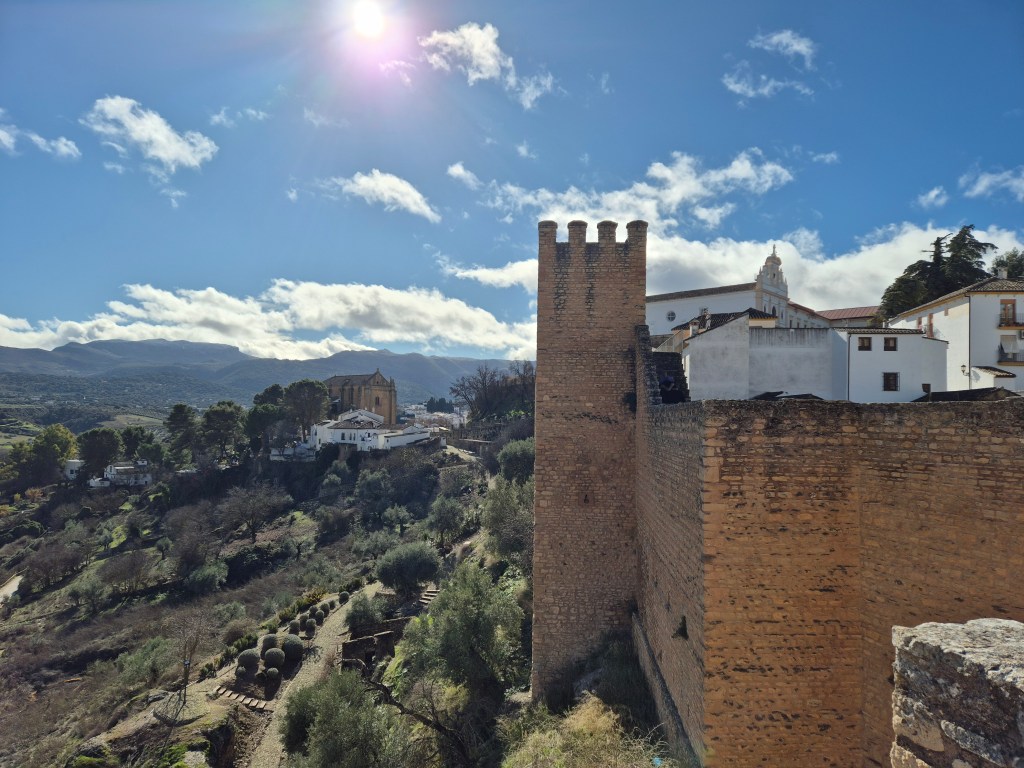
Exploring further, we accidentally stumbled upon Murallas de la Cíjara, remnants of the old defensive walls of the city. This turned out to be one of those delightful unplanned discoveries that travel often rewards you with. Narrow steps lead up along the walls, and from the higher points sweeping views open across the countryside, dotted with white houses and rolling hills stretching far into the distance.
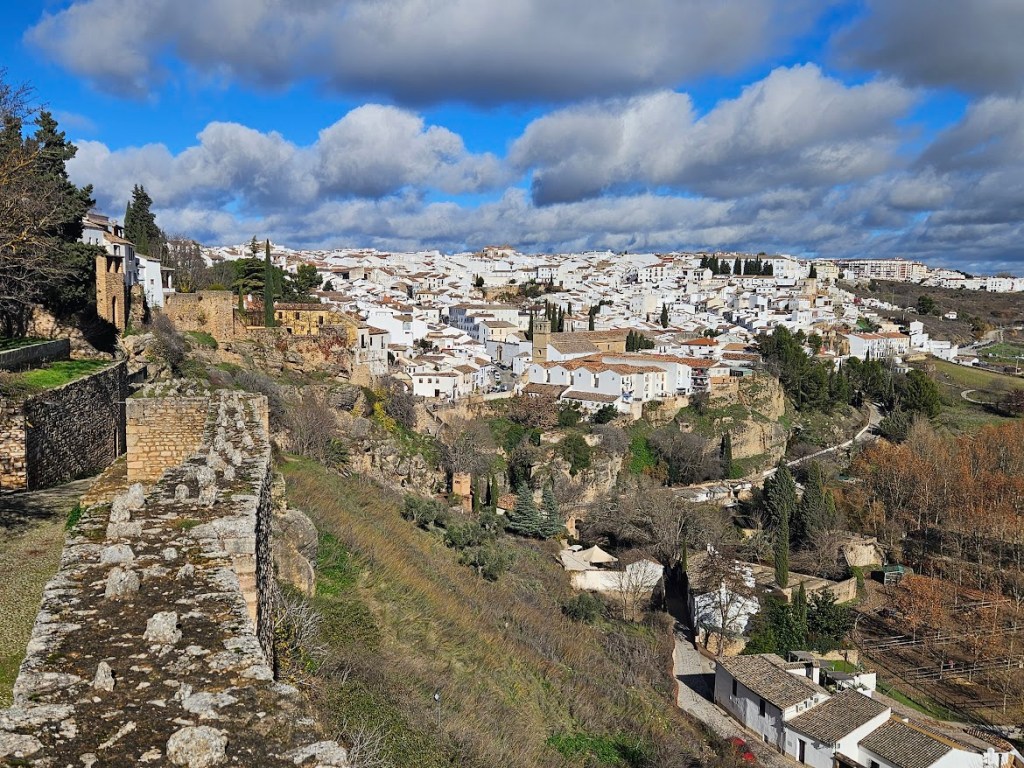
Before leaving the town, we made our way towards Puente Viejo (the Old Bridge) and sections of the old city walls and ruins, quiet reminders of Ronda’s long medieval history.
Soon our four hours in Ronda were coming to an end, and we hurried back to the bus stop to continue our journey to the next remarkable town.
Setenil de las Bodegas: A Village Built into the Rock
After exploring Ronda, our journey continued to Setenil de las Bodegas, one of Andalusia’s most unusual white villages. Unlike many towns where houses sit above the landscape, Setenil is built directly into the rock itself, with whitewashed homes and cafés tucked beneath enormous overhanging cliffs.
Upon arrival, a tourist shuttle train took us from the parking area to the town centre, offering glimpses of the village’s distinctive white houses along the way. From the drop-off point near the bus terminal, we had about an hour to explore Setenil at our own pace.
From the drop-off point, we walked towards the right side of town, following the path to the Setenil viewpoint and sign before crossing the river. From this vantage point, the view of Setenil is remarkable: clusters of white houses wedged between towering rock formations, rising along the hillside in layers.
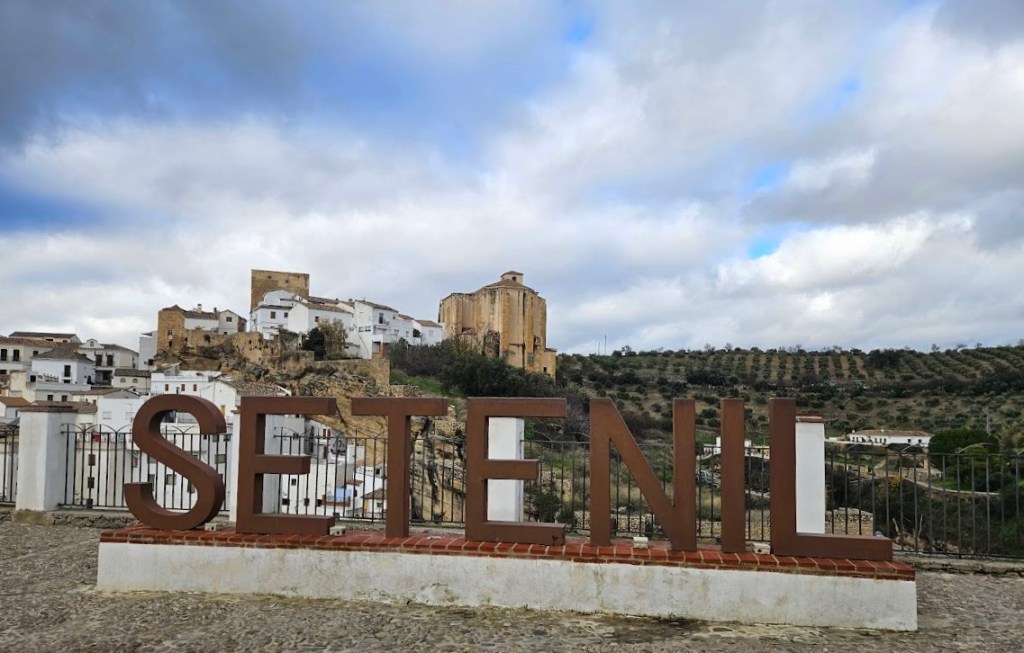
Descending back towards the village, we continued along Calle Jaboneria, a narrow street that follows the course of the Trejo River. Here the houses appear almost suspended between the rock above and the river below.
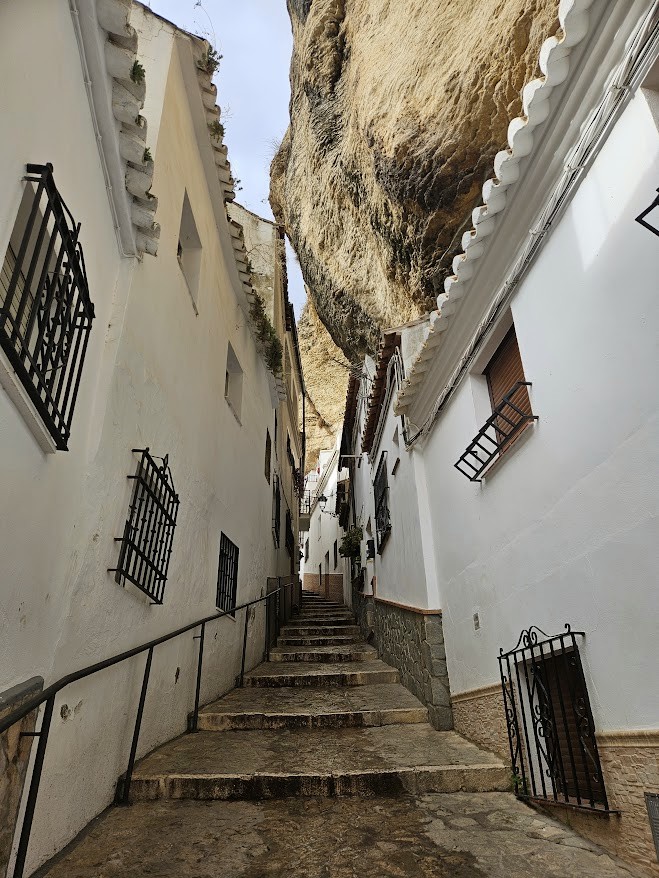
One of the most picturesque corners of the village is Calle Herrería, a quiet street lined with white houses built directly into the rock face. Stone stairways wind through the street, leading between homes and terraces, adding to the charm of this unique corner of the village.
From here we continued towards Calle Cuevas del Sol, perhaps the most famous street in Setenil and the postcard image most visitors recognise. Restaurants and houses sit beneath enormous overhanging cliffs, with the river flowing quietly alongside the narrow street.
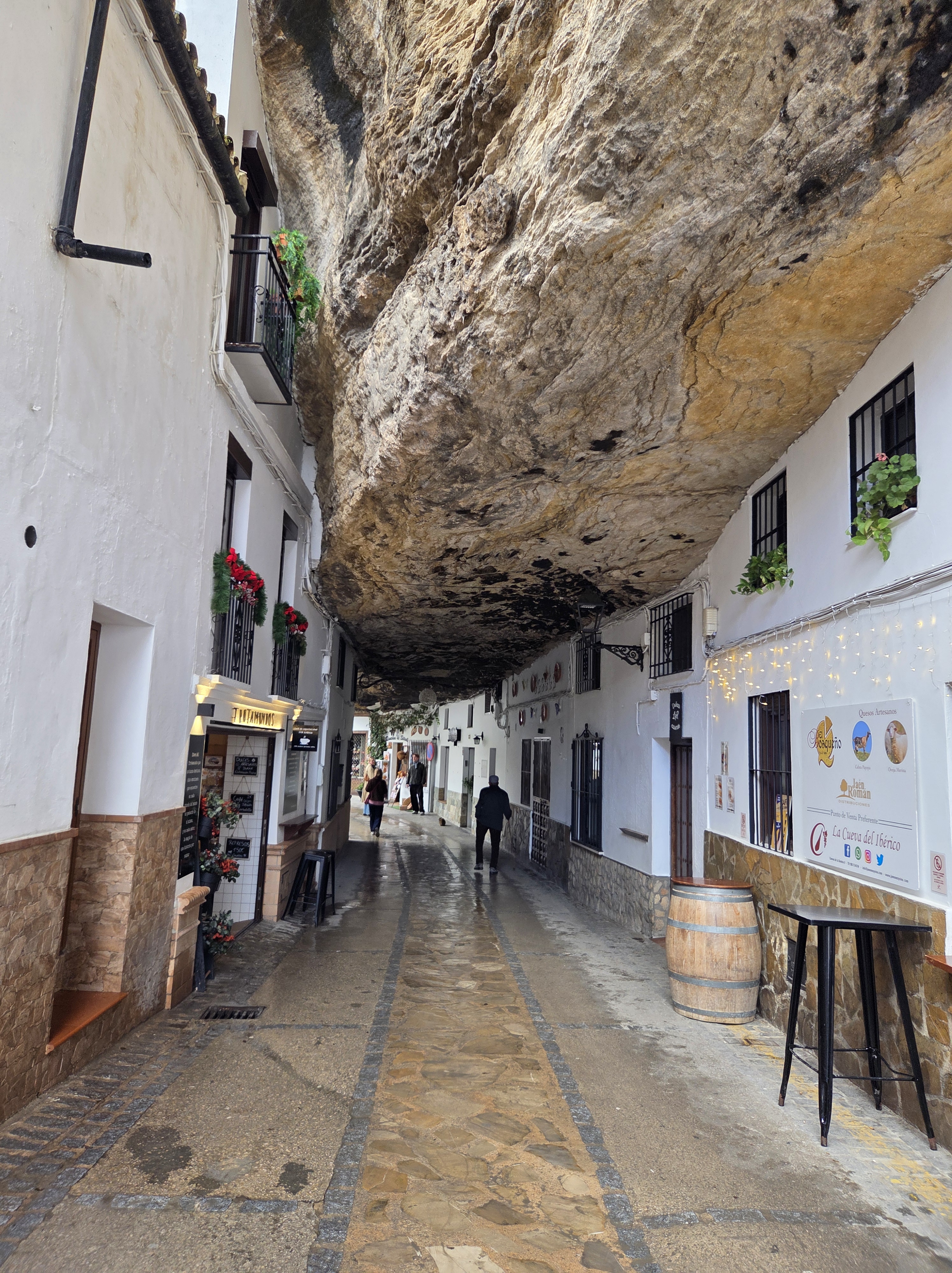
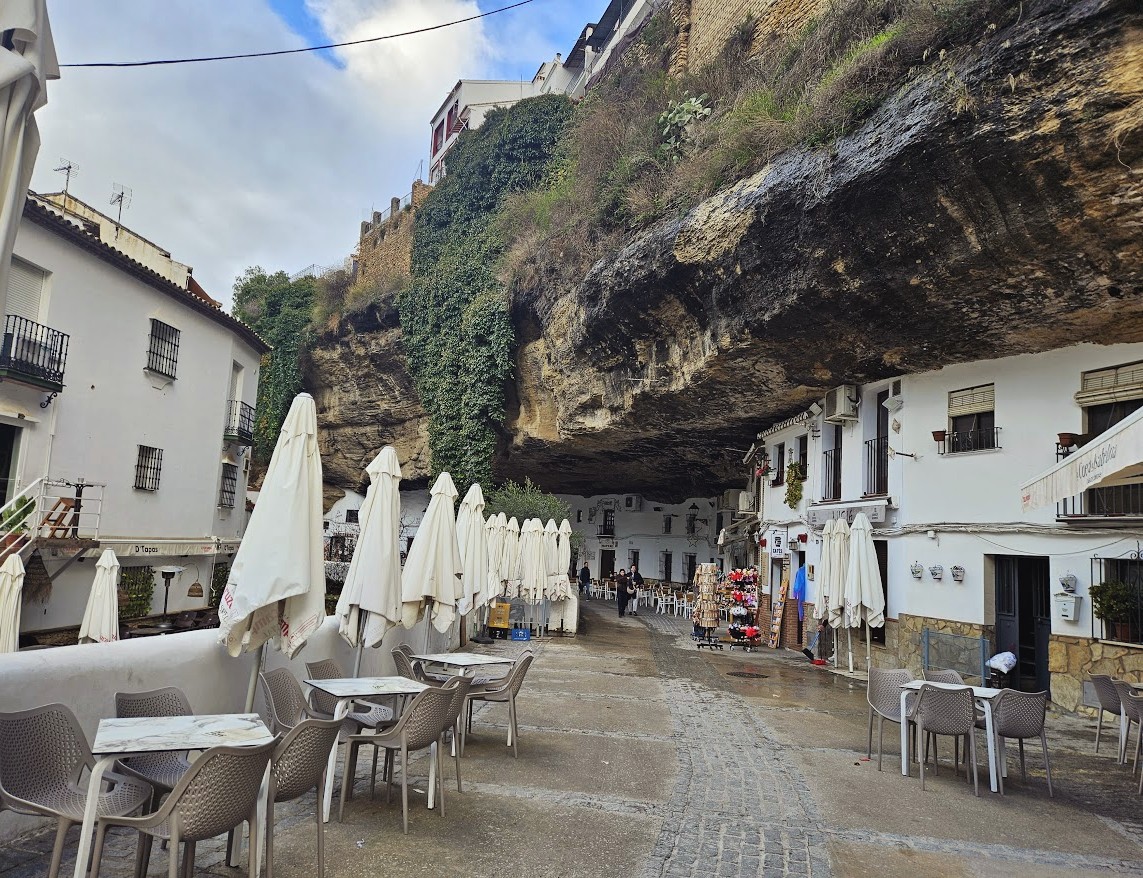
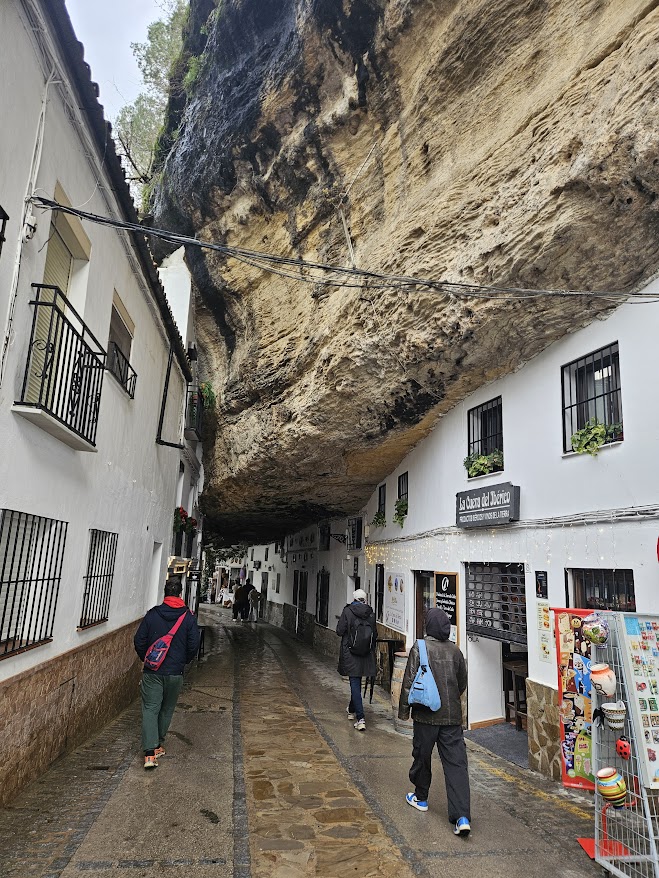
Walking through these streets feels almost surreal, narrow winding lanes, the gentle sound of the river, and white houses tucked beneath immense rock formations. It feels as if the village and the landscape have grown together over centuries.
Returning to Málaga
Soon it was time to return to the bus and begin the journey back to Málaga. The day had taken us through two of Andalusia’s most remarkable towns: the dramatic cliffs and historic streets of Ronda, and the extraordinary rock-carved houses of Setenil de las Bodegas.
Back in Málaga, we would rest for the evening before continuing our Andalusian journey the next day, this time heading to the historic city of Granada.
 Our Wandering Chapter
Leave a comment